Why Vehicle Checks Break Down Across Shifts

Why vehicle readiness is hard to maintain across shifts

Fire and EMS vehicle readiness depends on consistency. Every shift assumes that the apparatus they inherit has been inspected, documented, and cleared for service. When that assumption is wrong, the consequences surface quickly.

Most breakdowns in vehicle readiness are process failures, not mechanical ones. Information is lost between shifts. Inspections are completed differently by different crews. Issues are noted but not tracked through resolution. Over time, these inconsistencies weaken confidence in the fleet.

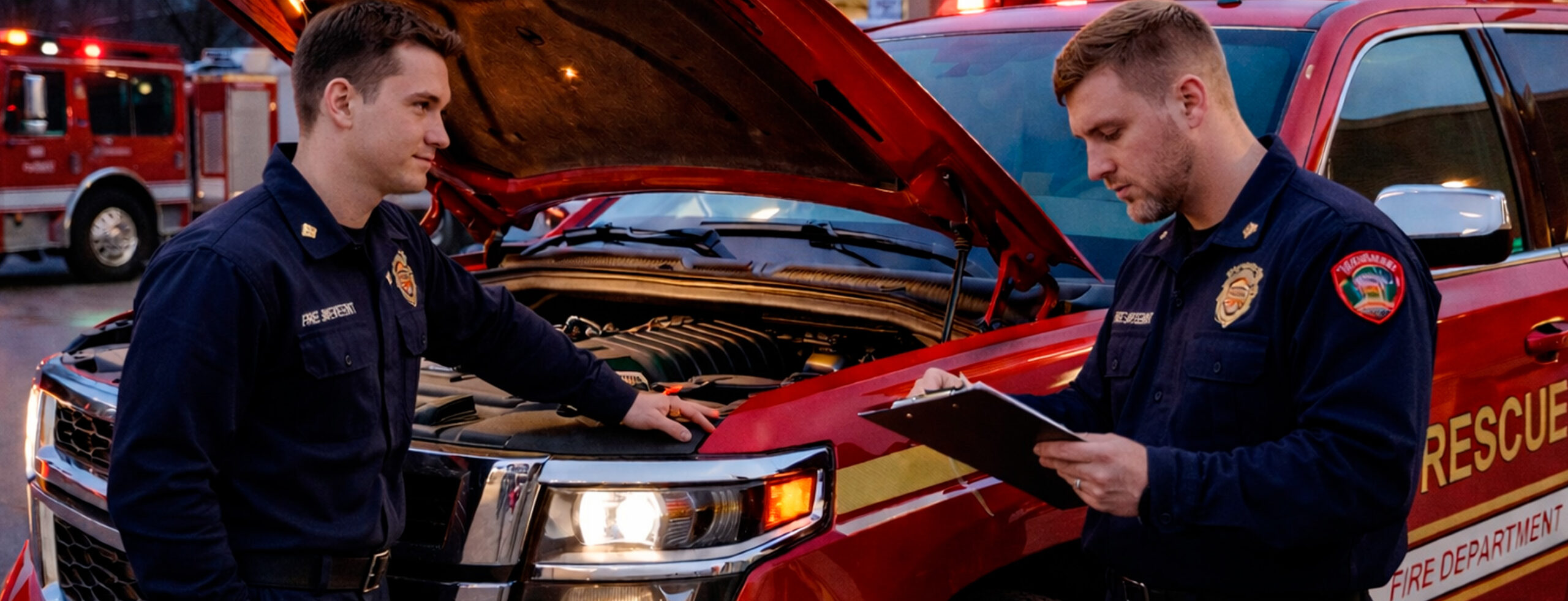
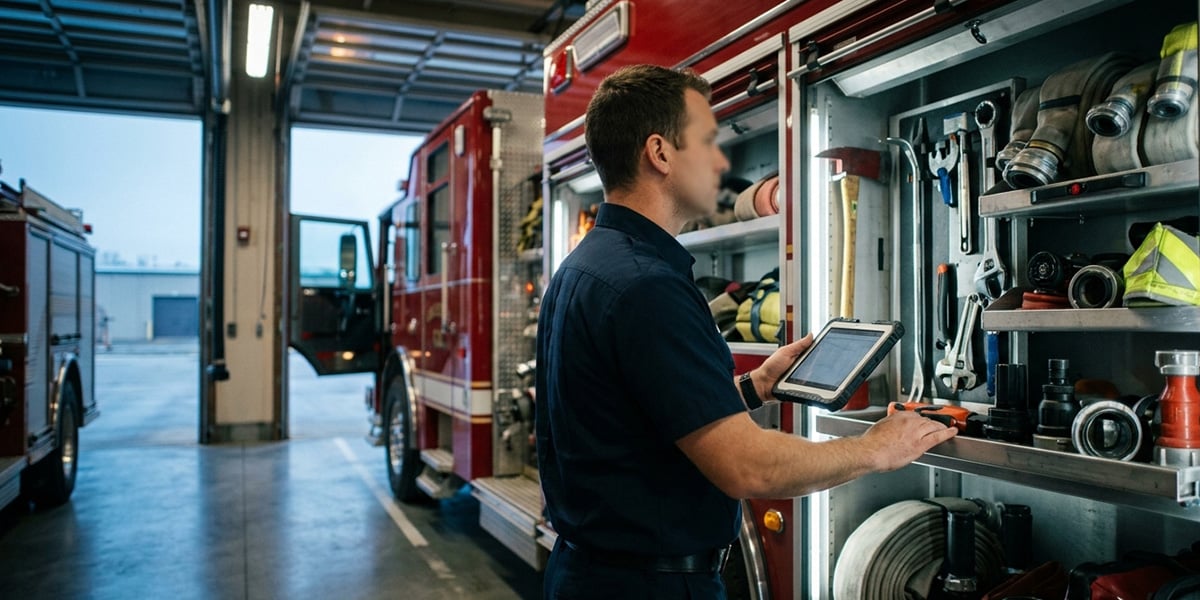
When vehicle checks rely on paper logs, clipboards, or verbal updates, maintaining continuity across crews is difficult.

How vehicle checks are typically handled

In many departments, vehicle inspections are managed through a combination of:

  • Paper checklists kept in apparatus binders

  • Clipboards used during daily checks

  • Notes written in margins or separate logs

  • Verbal updates passed during shift change

  • Maintenance records stored separately

Each tool serves a purpose, but none of them guarantee that information carries forward cleanly from one crew to the next. What one crew documents may not be obvious to the next. Over time, uncertainty becomes normalized.

Where vehicle checks break down between crews

The same patterns appear across agencies of all sizes.

Inspections vary by individual

Without standardized checklists, different crews interpret inspection steps differently. One crew may flag an issue that another considers acceptable.

Issues are identified but not followed through

A problem may be noted on a checklist, but without a structured process, there’s no guarantee it was assigned, repaired, verified, and cleared before the vehicle returns to service.

Shift-change communication is incomplete

Verbal handoffs are efficient, but they are also fragile. Details get missed, misunderstood, or forgotten, especially during busy transitions.

No clear record of what changed

Paper logs confirm that a check occurred, but they rarely show what changed since the last inspection.

Maintenance history is disconnected

Inspection records, service notes, and repair documentation often live in separate systems. Crews and supervisors cannot easily see the full picture.

Supervisors lack real-time visibility

Without centralized data, leadership cannot see which vehicles are ready, restricted, or awaiting repair across shifts or stations.

Why this matters across shifts

Breakdowns in vehicle checks affect more than paperwork.

Apparatus readiness

When inspections are inconsistent, small issues turn into larger problems that take vehicles out of service unexpectedly.

Crew safety

Responders depend on their apparatus in high-risk environments. Unclear readiness increases exposure for both crews and the public.

Accountability and compliance

Incomplete inspection histories weaken audit readiness and make it harder to demonstrate due diligence.

Operational efficiency

Unexpected downtime disrupts coverage, increases maintenance urgency, and complicates staffing decisions.

Trust between crews

When documentation is unreliable, crews recheck work, creating frustration and wasted time.

What a reliable cross-crew inspection program requires

Maintaining vehicle readiness across shifts requires structure that supports continuity.

A strong program should:

Standardize inspection steps

Every crew should complete the same checks in the same way, reducing interpretation differences.

Automate scheduling

Daily, weekly, and periodic inspections should appear automatically so nothing is missed during shift transitions.

Capture inspection results clearly

Documentation should show not just completion, but results, notes, and status changes.

Create closed-loop issue tracking

Identified problems should move through a documented workflow until resolved and verified.

Connect inspections to maintenance

Repair actions and service history should connect directly to inspection findings.

Provide real-time visibility

Supervisors should be able to see fleet readiness instantly without collecting paperwork.

Signs vehicle checks are breaking down

Many agencies recognize problems only after disruption occurs.

Common warning signs include:

  • Repeated rechecks between shifts

  • Vehicles taken out of service unexpectedly

  • Conflicting inspection records

  • Unclear maintenance status

  • Increased reliance on verbal updates

  • Difficulty explaining readiness during reviews

These signals indicate that inspection continuity is failing.

What to look for in a better approach

When evaluating how to improve vehicle inspections, agencies should focus on continuity and clarity.

A reliable solution should be:

  • Easy for crews to complete quickly

  • Structured to enforce consistency

  • Automated to reduce missed inspections

  • Transparent for leadership oversight

  • Integrated with maintenance workflows

  • Scalable across vehicle types and stations

Why agencies move to PSTrax

Agencies often adopt PSTrax when paper-based vehicle checks no longer support cross-crew readiness.

PSTrax helps agencies:

  • Standardize vehicle inspections across all shifts

  • Capture inspection results with clear documentation

  • Route issues automatically for resolution

  • Maintain connected inspection and maintenance histories

  • Provide real-time visibility into fleet readiness

By replacing fragmented processes with a unified system, agencies reduce uncertainty and strengthen confidence across every shift.

Conclusion: Vehicle readiness depends on continuity

Vehicle checks do not fail because crews stop caring. They fail because systems do not carry information forward.

A modern vehicle inspection approach creates continuity across shifts, enforces accountability, and ensures that readiness is visible and verifiable at all times. When agencies move beyond paper-based checks, they protect their crews and keep apparatus ready when it matters most.

Request a Demo of PSTrax.

Complete the form below for a brief personalized demonstration of PSTrax and how we help public safety agencies successfully and move from pen and paper to a more reliable, efficient, and affordable solution.

Privacy Preference Center

//LinkedIn Tag start// //LinkedIn tag end//