What Your Narcotics Tracking System Has to Prove in a DEA Audit

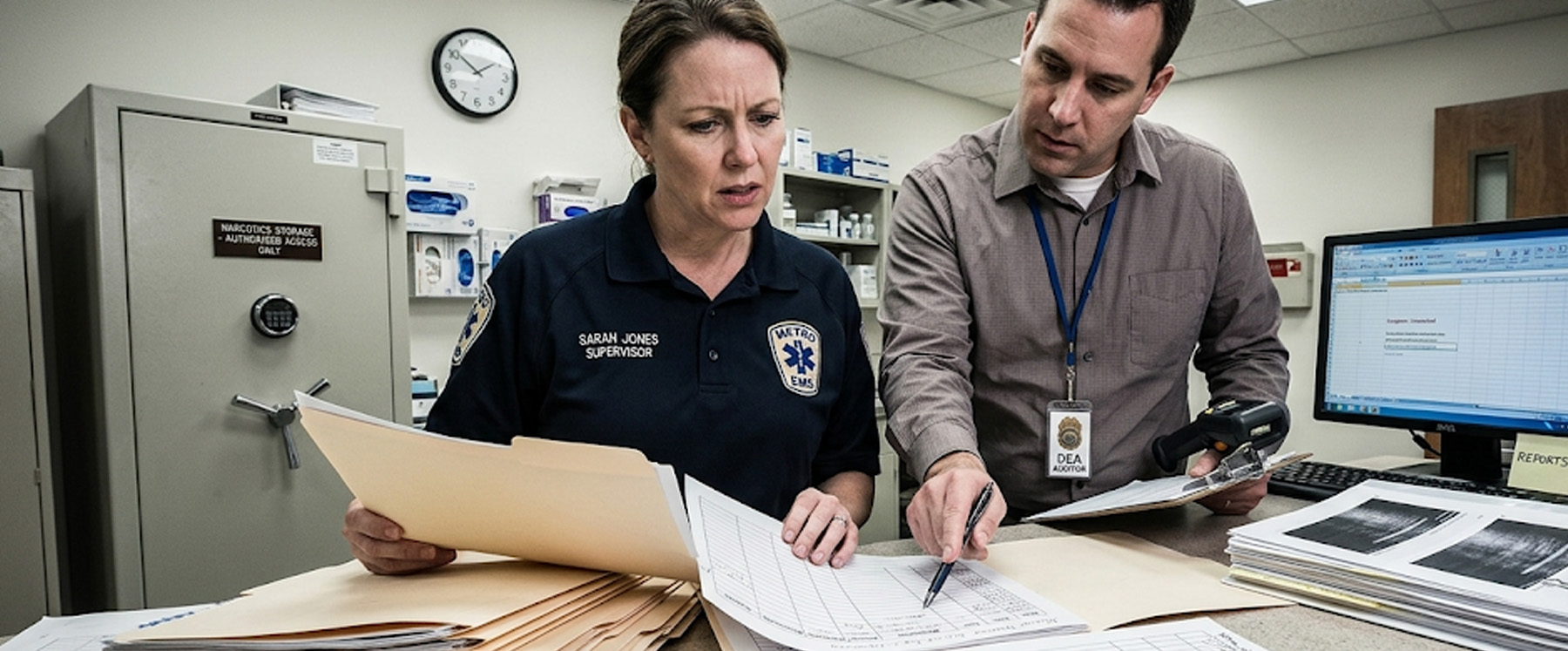
A DEA audit doesn’t evaluate how seriously an agency takes controlled substance management. It evaluates the records. The intent behind a process, the experience of the staff running it, and the general reputation of the department are not factors. What gets reviewed is documentation: who handled what, when, under what authorization, and what happened in every instance where the expected and the actual didn’t match.

For EMS agencies, law enforcement units, and other organizations that maintain controlled substance inventories, that reality shapes what a tracking system has to do. A process that functions well day to day but produces incomplete or inconsistent records under scrutiny is not a compliant process. It’s a process that hasn’t been tested yet.

Understanding where EMS compliance gaps most commonly emerge is the starting point for evaluating whether a current system would hold up under that kind of review.

What a DEA audit is actually looking for

The core of a DEA audit in an EMS or law enforcement context is chain-of-custody integrity. Every controlled substance in an agency’s inventory needs to be accounted for from receipt through administration or disposal. Any gap in that chain is a finding, regardless of whether the substance is actually missing.

Beyond chain of custody, auditors look at several specific areas. Was access to controlled substances restricted to authorized personnel, and is there documentation to prove it? Were discrepancies logged and investigated at the time they occurred, or are they being reconstructed after the fact? Are waste and disposal records complete and witnessed? Do count records reconcile across shifts, and if they don’t, is there a documented explanation?

The standard isn’t that nothing went wrong. Discrepancies happen in operational environments. The standard is that when something went wrong, it was caught, documented, and addressed within the system. An agency that can show a clean discrepancy log with documented resolutions is in a meaningfully different position than one that can’t produce the log at all.

Where most tracking systems fall short under audit conditions

The gaps that surface in a DEA audit are rarely the result of misconduct. They’re usually structural failures in the tracking system itself. The four most common are:

    1. Incomplete chain-of-custody records: Paper logs and basic digital tools often capture administration events but miss transfers, restocking, and witnessed waste. When an auditor traces a controlled substance from receipt to end use and finds entries without witnesses, missing timestamps, or unsigned transfers, each gap is a separate finding.
    2. Unresolved or undocumented exceptions: A discrepancy that was noticed, investigated informally, and resolved verbally doesn’t exist in the audit record. If the system doesn’t require exceptions to be logged and closed with documentation, the agency has no way to show that a discrepancy was handled properly rather than overlooked.
    3. Permissions that can’t be verified: When a log entry shows a name but no credential verification, or when a system allows any user to make entries without role-based access controls, the audit question of whether authorized personnel made each entry can’t be answered cleanly. The record shows who claimed to do something, not who was authorized to.
    4. Reporting that requires manual assembly: If producing a complete audit report means pulling records from multiple sources, cross-referencing shift logs, and manually compiling a chain-of-custody summary, the process introduces error and delay at exactly the moment accuracy matters most. An auditor working in real time doesn’t wait for a compiled report.

What audit-ready narcotics tracking requires in practice

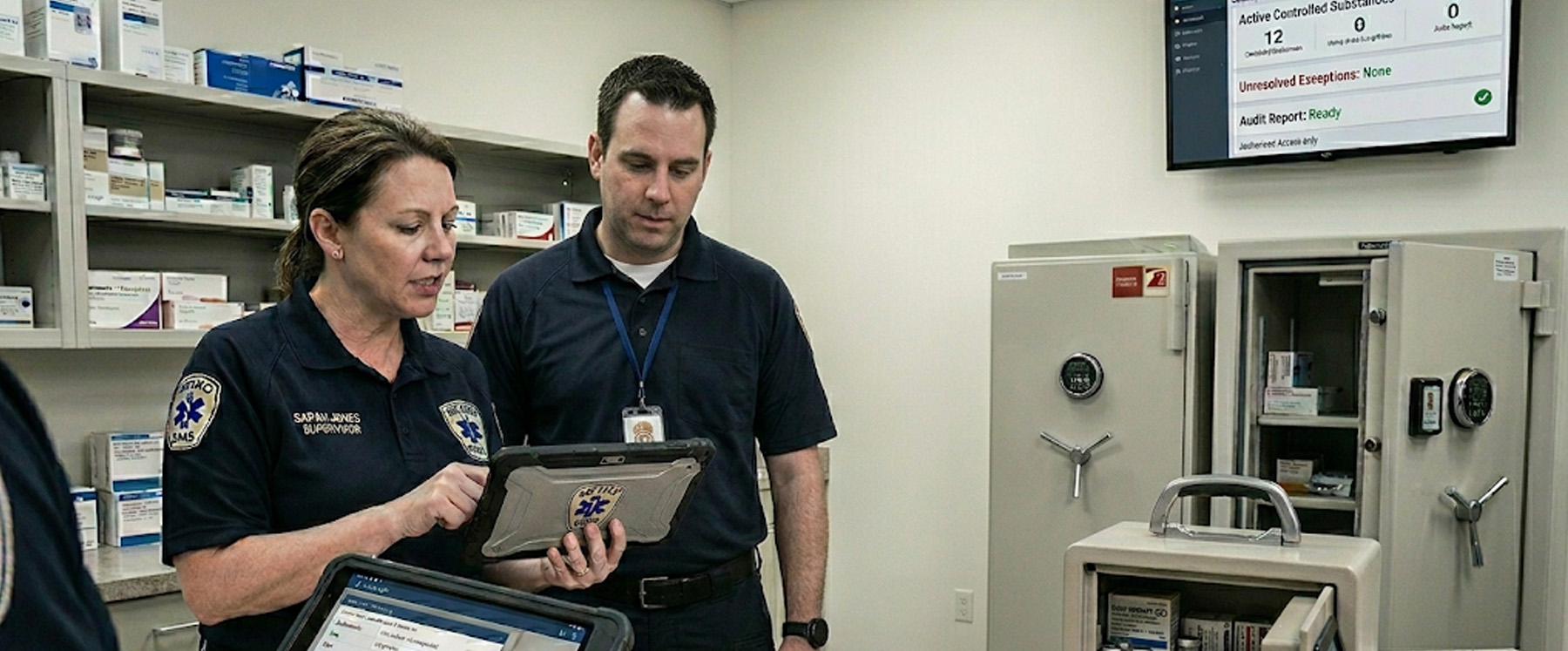
controlled substances tracking system built for first responder compliance handles the areas above as structural requirements, not optional features.

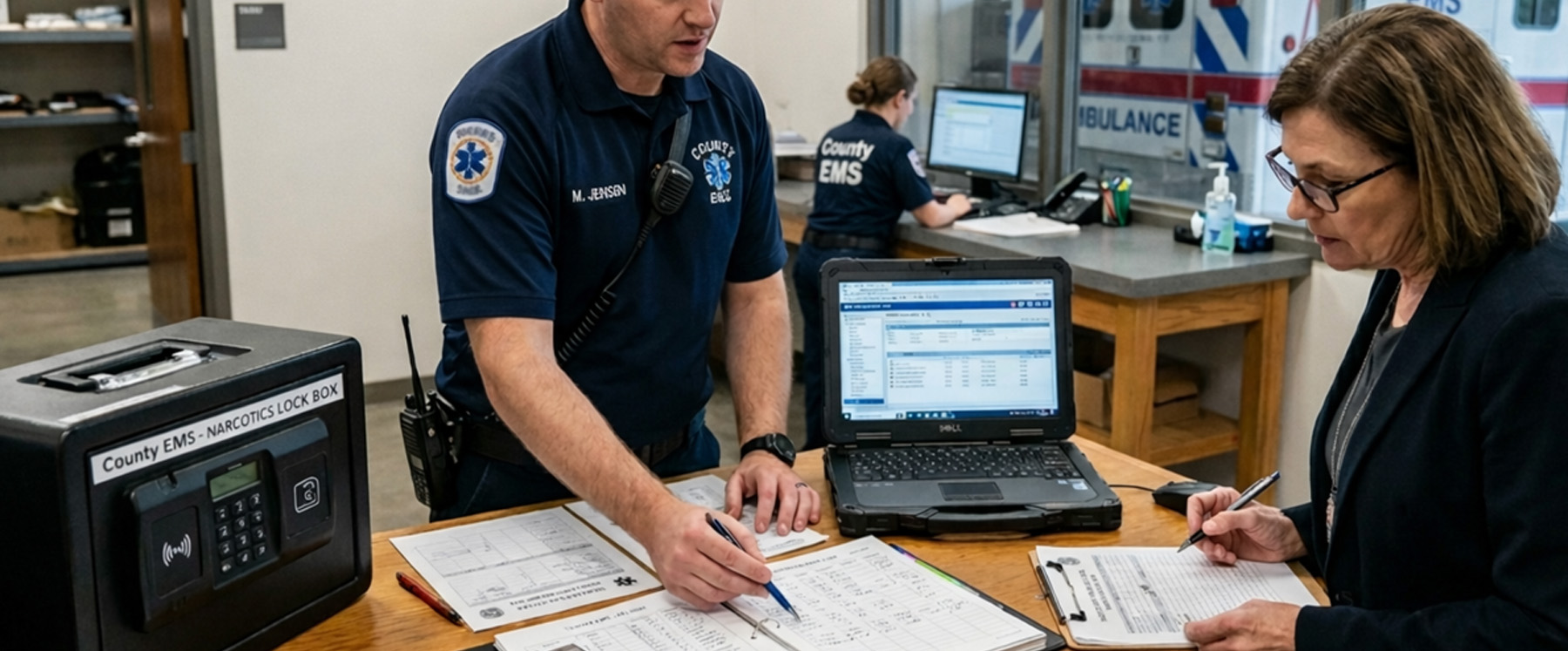
Chain-of-custody integrity means every transaction — receipt, storage, administration, transfer, waste, and disposal — is captured with a timestamp, a user attribution, and a witness record where one is required. The record isn’t assembled after the fact. It’s built entry by entry as the process happens.

Exception handling means the system requires discrepancies to be logged at the time they’re discovered. An exception that isn’t documented in the system doesn’t exist from an audit standpoint, so the platform should make documentation the path of least resistance, not an additional step someone has to remember.

Role-based permissions mean access is controlled at the system level. Only authorized personnel can make entries, and the record reflects who was authorized at the time of each transaction. If access permissions change, the history of what each user was permitted to do at any given point is preserved.

Audit-ready reporting means a complete, structured chain-of-custody report can be produced on demand, without manual compilation. When an auditor asks for documentation of a specific substance over a specific period, the answer is already organized.

The question worth asking before the audit arrives

Most agencies don’t discover gaps in their narcotics tracking system during routine operations. They discover them when an audit, an inspection, or an internal review asks questions the system can’t answer cleanly. By that point, the gap has already existed for some time.

The productive question isn’t whether the current process feels adequate. It’s whether the records it produces could withstand line-by-line review by an auditor who has no context about how the agency operates and no interest in anything other than what the documentation shows.

PSTrax supports controlled substance checks with chain-of-custody tracking, exception logging, role-based permissions, and audit-ready reporting built into the platform. For agencies evaluating whether their current system meets that standard, choosing a first responder readiness platform designed for compliance environments is where that assessment starts.

Request a Demo of PSTrax.

Complete the form below for a brief personalized demonstration of PSTrax and how we help public safety agencies successfully and move from pen and paper to a more reliable, efficient, and affordable solution.

Privacy Preference Center

//LinkedIn Tag start// //LinkedIn tag end//