A Mental Readiness Program Your Agency Can Actually Run: Where to Start.
Part 3 of 3: PSTrax + Mental Hygiene Project™ | Mental Readiness Series
Most first responder leaders who have read Parts 1 and 2 already know that mental readiness matters. This piece focuses on how to begin building a program. Establishing a mental readiness program doesn’t require a large budget, clinical staff, or a complete cultural overhaul. Like any operational system, it depends on defined roles, repeatable processes, and leadership ownership.
The organizations seeing the strongest results in mental readiness aren’t necessarily the largest or best-funded. They’re the ones that decided to build something structured, even if it started small, and then held themselves accountable for maintaining it.
Start With What You Already Understand
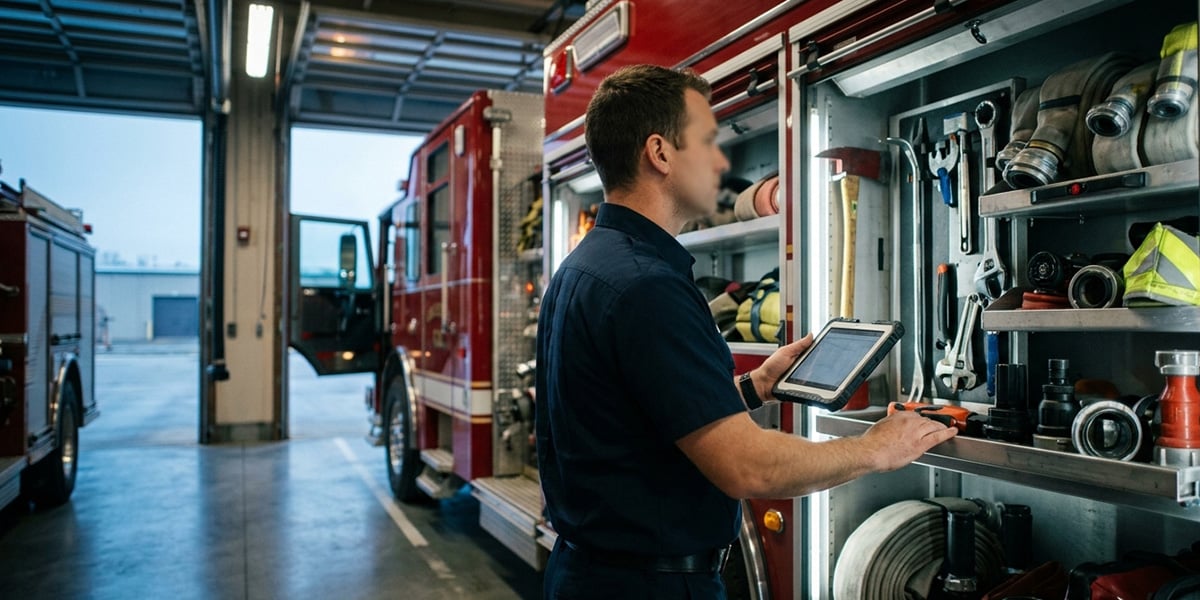
First responder culture is built around systems that repeat. Vehicle checks happen every shift, not because someone decided to check today, but because the process is defined and the expectation is set. Controlled substances are logged after every use. Equipment inspections follow a schedule. Nobody debates whether these systems are necessary. They’re just part of how operations run.
Mental readiness relies on the same operational systems your agency already uses. The goal is to integrate readiness practices into an area that has been largely unmanaged.
When you frame it that way for your leadership team, the conversation changes. This isn’t a mental health program in the clinical sense. It’s a readiness system for the most critical asset your agency has.
The Core Components
A functional mental readiness program doesn’t need to be complex. It needs to be consistent. These are the components that matter most.
Trained peer support. Peer support forms the foundation of most effective first responder wellness programs. Responders are far more likely to open up to someone who has run the same calls, worked the same shifts, and understands the culture from the inside.
Peer supporters are not therapists. They’re trained colleagues who know how to have a productive conversation, recognize when someone needs more support than they can provide, and make a warm referral to professional resources.
Training for that role typically takes two to three days and is widely available through organizations such as the International Association of Fire Fighters (IAFF), the National Volunteer Fire Council (NVFC), and similar bodies.
A clear referral pathway. Peer support only works if there’s somewhere to refer people. Every agency needs a clear support pathway that takes a responder from a conversation with a peer supporter to access to professional support, with as few barriers as possible.
Agencies need to understand their Employee Assistance Program (EAP) coverage, confidentiality protections, off-hour access, and how to communicate this information proactively to personnel.
Regular training touchpoints. A single annual training session on mental health awareness is not a program. It’s merely a checkbox. Effective programs build regular touchpoints into the calendar, at minimum quarterly, that keep mental readiness in the conversation without requiring a major production each time.
These touchpoints can be brief: a 20-minute shift discussion, a short online module, or a structured debrief after a significant incident. The goal is frequent, familiar touchpoints rather than long sessions.
Supervisor skill development. As Part 2 of this series covered, supervisors don’t need to be clinicians. They need to know their role and be trained to fill it. That means recognizing the early behavioral indicators described in Part 1, knowing how to initiate a conversation without crossing into territory that requires professional training, and consistently following the agency’s established process. This is a learnable skill set that often determines whether a program functions consistently or stalls at the supervisor level.
Aggregate documentation. Track what you can at the program level: training completion rates, peer support activation counts, EAP referral trends over time. This data doesn’t identify individuals. It tells you whether your program is being used, where gaps exist, and whether your investment is having an effect. It also provides documentation during accreditation assessments, liability reviews, and duty-of-care inquiries.
Resilience Is Built, Not Issued
One of the most important reframes for first responder leaders is this: resilience is not a fixed trait that some people have, and others don’t. It’s a capability that develops over time with the right conditions and practice.
The Mental Hygiene Project defines resilience as the ability to withstand, recover, and grow from adversity. Not to avoid it. Not to be unaffected by it. To move through it and come out with greater capacity on the other side. That kind of resilience doesn’t develop by accident. It develops through education, consistent practice, and an environment where personnel feel supported rather than judged for struggling.
This matters practically for how agencies approach training. Programs that teach specific skills, stress recovery techniques, communication tools, and strategies for managing cumulative load produce measurably different outcomes than programs that simply raise awareness. Awareness is where this conversation starts. Skill development is where it becomes useful.
The Mental Hygiene Project’s framework around optimism and perception is one practical example. Research links optimistic thinking with stronger resilience, faster recovery from high-stress events, and improved long-term health. This is supported by multiple peer-reviewed studies of high-stress occupational groups.1
Teaching personnel to recognize and shift their thinking patterns is a trainable skill that improves both mental wellness and operational performance.
The Scalability Problem and How to Solve It
One of the most common barriers agencies cite when building mental readiness programs is delivery. How do you get consistent training to personnel spread across multiple shifts, multiple stations, and in some cases multiple jurisdictions?
Online training solves much of that scalability challenge, and it’s more accessible than most agencies expect.
Online mental readiness training allows agencies to deliver consistent content to every member of their workforce, regardless of shift schedule, station assignment, or geography. Personnel complete modules at a time that works for their rotation.
Completion is tracked automatically. The content is the same for everyone, eliminating the inconsistency that comes from relying on individual supervisors or in-person sessions to carry the full training load.
Mental Hygiene Project’s online training and development programs are built specifically for this purpose, providing scalable education on resilience, stress recovery, communication, and leadership that first responder agencies can deploy across their entire workforce without pulling people off response.
Measuring Program Effectiveness
Agencies sometimes hesitate to build a formal program because they’re not sure how they’ll know if it’s working. The metrics aren’t as complicated as they might seem.
In the early stages, progress looks like awareness and access. Are personnel completing training? Do they know what peer support is and how to use it? Do supervisors know their role?
As the program matures, progress looks like utilization: peer supporters are activated, EAP referrals increase, and sick time trends improve.
Over a longer horizon, progress looks like retention and culture. Are experienced personnel staying longer? Are new hires reporting that mental readiness is part of how the agency operates? Is the conversation happening at every level of leadership, not just at mandatory training sessions?
None of these metrics require clinical expertise to track. They require the same documentation discipline that your agency already applies to equipment and vehicles.
The Series in Summary
This three-part series began with a straightforward argument: cumulative trauma is an operational risk and deserves the same proactive investment that agencies already make in equipment readiness.
Part 2 made the case that undocumented wellness programs are an organizational liability, with real consequences for compliance, accreditation, and workforce sustainability.
This piece has tried to answer the practical question: what does a functional program actually look like, and how do you build one?
Most agencies can begin with a straightforward framework: start with peer support, establish a referral pathway, build a training cadence, train supervisors, and document everything. Treat the program with the same accountability applied to every other operational process.
Every emergency response system relies on people who are equipped to meet the demands of the job. Developing a program that supports mental readiness is an investment in both responder well-being and operational effectiveness.
Take the Next Step
Mental Hygiene Project offers online training, executive leadership development, professional speaking, and strategic consulting designed specifically for first responder organizations. Their programs are built to be practical, scalable, and grounded in the realities of first responder culture.
Learn more about the PSTrax + Mental Hygiene Project partnership and the services available to your agency at Mental Hygiene Project.
Want to see how PSTrax supports operational readiness across every module and every shift? Schedule a demo today.
Read the full series:
Part 1 – Cumulative Trauma Is an Operational Risk. It’s Time to Treat It Like One.
Part 2 – Your Agency Has Policies for Everything. Mental Readiness Shouldn’t Be the Exception.
Sources
- Mental Hygiene Project, “Secrets to Better Mental Health and Total Wellness: Discovering the Power of Resilience, Optimism, and Hope,” MentalHygieneProject.com.