PPE Accountability Is a Safety Issue. It's Time to Manage It Like One - Part 1.
Firefighter safety starts long before crews arrive on scene. It starts with the equipment they trust to protect them.
Ask a fire chief or EMS director whether firefighter safety is a priority, and the answer is always yes. Ask whether they can immediately produce a complete inspection, cleaning, repair, and lifecycle history for every set of PPE in their department, and the answer is often less certain.
That gap between a department’s commitment to safety and the documentation that proves it is where risk lives. Not theoretical risk. Operational risk.
A set of turnout gear that should have been cleaned, repaired, inspected, or retired can remain in service simply because the department lacks visibility into its condition and history. For agencies still managing PPE with spreadsheets, paper logs, or disconnected systems, that risk compounds every shift for the firefighter wearing the gear, the officer responsible for the crew, and the chief accountable for the department.
PPE tracking is not an administrative task separate from safety. It is part of the safety program itself.
Gear that is not properly tracked creates more than a recordkeeping challenge. It can create safety concerns, liability exposure, and compliance challenges. A department cannot effectively manage what it cannot see, and it cannot demonstrate what it cannot document.
Digital accountability helps close that gap. When PPE management is built into the daily workflow, departments gain visibility without adding unnecessary administrative burden.
The Hidden Risks of Poor PPE Tracking
Most PPE failures do not announce themselves in advance. A set of gear does not fail a scheduled inspection because the inspection was never scheduled. A cleaning cycle gets missed because no one received a reminder. A retirement date passes because the information needed to make a decision was stored in a binder, spreadsheet, or someone’s memory.
These are not isolated problems. They are predictable outcomes of manual processes that depend on individual follow-through, paper documentation, and inconsistent handoffs between shifts.
The risks extend beyond the firefighter wearing the equipment. When a department cannot quickly verify inspection records, maintenance history, or retirement decisions, it may struggle to demonstrate that appropriate steps were taken to protect personnel.
The National Fire Protection Association recognizes the importance of proper care, inspection, maintenance, and documentation of protective ensembles through its standards for structural firefighting PPE. Maintaining reliable records is an essential part of ensuring protective equipment remains serviceable throughout its lifecycle.
The true cost of poor PPE management extends beyond replacement expenses. Our article, The Hidden Lifecycle Costs of Poor PPE Tracking, explores how poor PPE tracking can lead to unnecessary equipment replacement, increased administrative workload, missed maintenance activities, and greater difficulty demonstrating responsible PPE management.
For departments, the question is not simply whether PPE records exist. The question is whether those records are complete, accessible, and actionable when they matter most.
What NFPA 1850 Requires and What Departments Need to Produce
NFPA 1850 establishes requirements for the selection, care, and maintenance of structural firefighting protective ensembles and provides guidance for documenting PPE inspections, cleaning, repairs, and retirement decisions.
The standard itself is not new. What continues to change is the expectation that departments can produce accurate documentation when it is needed.
A chief, auditor, insurance carrier, or grant administrator should not have to wait days or weeks while someone searches through filing cabinets, spreadsheets, or multiple systems to reconstruct PPE history.
For departments managing gear manually, that expectation can be difficult to meet consistently. Records may become incomplete when personnel change roles. Inspection practices may vary between stations. Retirement decisions may depend on who is reviewing the gear rather than consistent department-wide criteria.
What appears to be a PPE management program on paper can become an accountability gap in practice.
Digital tracking does not replace department policies or procedures. It provides the visibility and documentation needed to consistently follow them.
PPE Responsibility Exist at Every Rank
PPE accountability is not only a chief-level concern or a frontline responsibility. It requires participation throughout the chain of command.
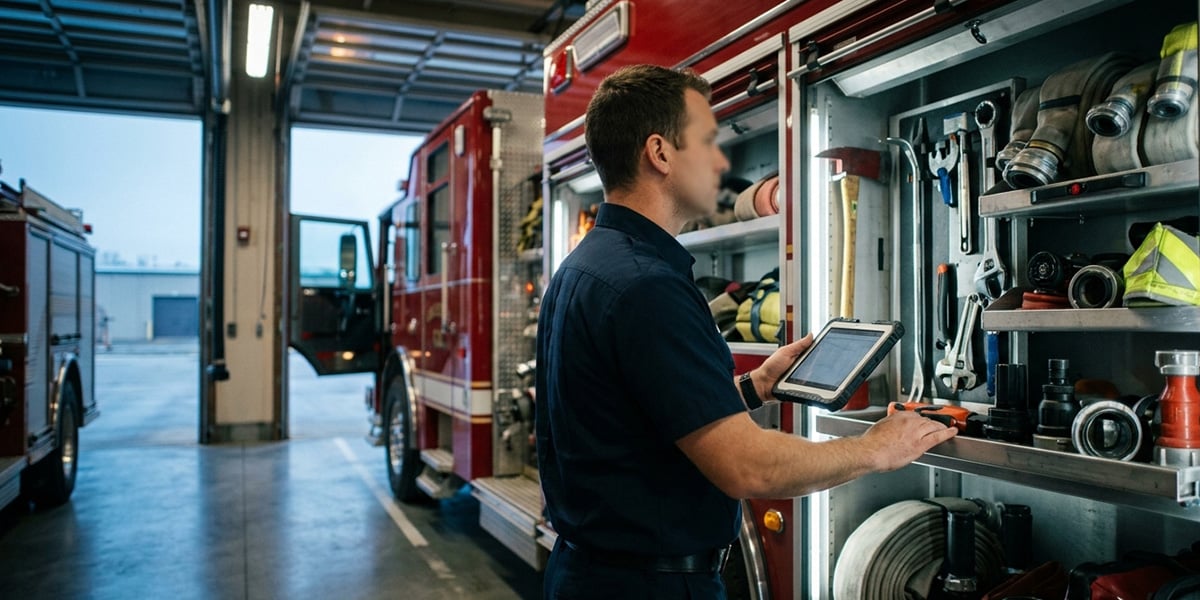
A firefighter completing a gear inspection needs a process that makes documentation fast and consistent. A company officer needs visibility into whether their crew’s equipment is current on inspections, cleaning cycles, and condition assessments. A battalion chief needs a station-level view of potential issues before they become operational concerns.
A fire chief or EMS director needs department-wide reporting that can demonstrate responsible PPE management during audits, inspections, or reviews.
When PPE information only exists at one level of the organization, gaps develop. When every role has access to the information they need, safety becomes part of the operational workflow.
This is the same principle discussed in the article on digital checklists and accountability for first responder station management. Moving from memory-dependent processes to system-supported processes helps departments create consistency across stations, shifts, and personnel.
When officers know their crews are wearing equipment with documented inspections, maintenance history, and serviceability records, they can make operational decisions with greater confidence before entering hazardous environments.
How Digital PPE Tracking Improves Daily Operations
The value of digital PPE tracking is most visible at the points where manual processes typically break down.
Inspection schedules stay on track
Instead of relying on someone to remember when gear is due for inspection, digital tracking assigns schedules at the equipment level and provides visibility into upcoming and overdue tasks.
Every set of PPE receives the attention it requires based on department policy, inspection schedules, and lifecycle requirements.
Cleaning and repair records stay with the gear
When a firefighter transfers stations or leaves the department, the history of their PPE should not leave with them.
Digital records remain attached to the equipment itself, giving new users and supervisors access to the complete history of inspections, repairs, cleaning, and assignments.
Lifecycle decisions become proactive
PPE retirement decisions should not happen only after equipment fails an inspection or becomes a concern.
Departments can use documented information such as age, condition, inspection history, and repair records to make informed decisions about when equipment should be removed from service.
Audit documentation is available when needed
Whether responding to an internal review, insurance request, or grant documentation requirement, departments need confidence that their PPE records are complete.
A centralized record allows departments to quickly access information by gear, station, assignment, or other criteria without manually compiling records from multiple sources.
Understanding the risks, requirements, and operational responsibilities around PPE management is the foundation. In Part 2, we look at how PSTrax and LION bring those responsibilities together through a partnership built specifically to help departments connect PPE expertise with day-to-day accountability.
Frequently Asked Questions
Documentation makes a safety program verifiable. Without accurate records, departments cannot consistently confirm that PPE inspections, cleaning, maintenance, and retirement schedules are being followed.
NFPA 1850 calls for documented inspections, cleaning and repair records, condition assessments, and retirement decisions, creating a traceable history for every set of gear throughout its lifecycle.
Common gaps include inconsistent inspection records, incomplete gear histories after personnel changes, and missed cleaning or maintenance activities. These issues are common when departments rely on paper records, spreadsheets, or individual memory.
Everyone in the chain of command. Firefighters document inspections, company officers monitor crew equipment, battalion chiefs oversee station readiness, and fire chiefs need department-wide visibility for audits, reviews, and operational oversight.
Digital PPE tracking helps departments maintain complete equipment histories, automate inspection reminders, document maintenance activities, and quickly identify gear that requires attention. Better visibility supports safer decisions and more consistent PPE management.