
Why SCBA Readiness Fails in Departments Using Paper Logs

Why SCBA failures are rarely sudden
SCBA readiness failures rarely happen without warning. Cylinders drift past hydrostatic test dates. Flow tests are logged inconsistently. Packs move between crews or apparatus without documentation. Exposure events are noted verbally but not recorded.
On paper, inspections appear to be happening. Logs get filled out. Signatures exist. But paper-based SCBA tracking struggles to reflect the full reality of how breathing equipment is used, shared, serviced, and maintained across shifts, apparatus, and stations.
SCBA is life-safety equipment. Any uncertainty around its condition, history, or compliance introduces unacceptable risk.
How SCBA tracking is commonly handled
Many departments still manage SCBA with a mix of:
-
Paper inspection logs stored in binders
-
Separate logs for cylinders, packs, and cascades
-
Manual tracking of fills and hydrostatic tests
-
Verbal updates when equipment is moved or repaired
-
Spreadsheets maintained outside daily workflows
Each record may be accurate on its own. Together, they form a fragmented system that makes it difficult to verify readiness with confidence.
When records are spread across formats and locations, leadership loses visibility into what is actually ready for use.

Where paper-based SCBA tracking breaks down
Departments consistently report these issues when managing SCBA with paper-based systems:
Missed or delayed inspections
Paper systems rely on memory and manual scheduling. Routine, post-incident, or special inspections get missed unintentionally during busy operations.
Incomplete lifecycle documentation
SCBA components move between apparatus, storage, and personnel. When those changes are not logged immediately, histories become unreliable.
Cylinder testing gaps
Hydrostatic test dates and cylinder lifecycles are critical. Paper logs make it easy to overlook deadlines, especially when cylinders are rotated frequently.
Exposure events without documentation
When SCBA gear is exposed to contaminants, documentation and follow-up are essential. Informal notes do not ensure gear gets evaluated or pulled from service properly.
Disconnected maintenance records
Repairs, vendor service, and inspections are often tracked separately. Without a unified record, it is difficult to assess condition or compliance quickly.
Limited oversight across crews
Supervisors may not know which packs or cylinders are fully compliant without manually reviewing logs.
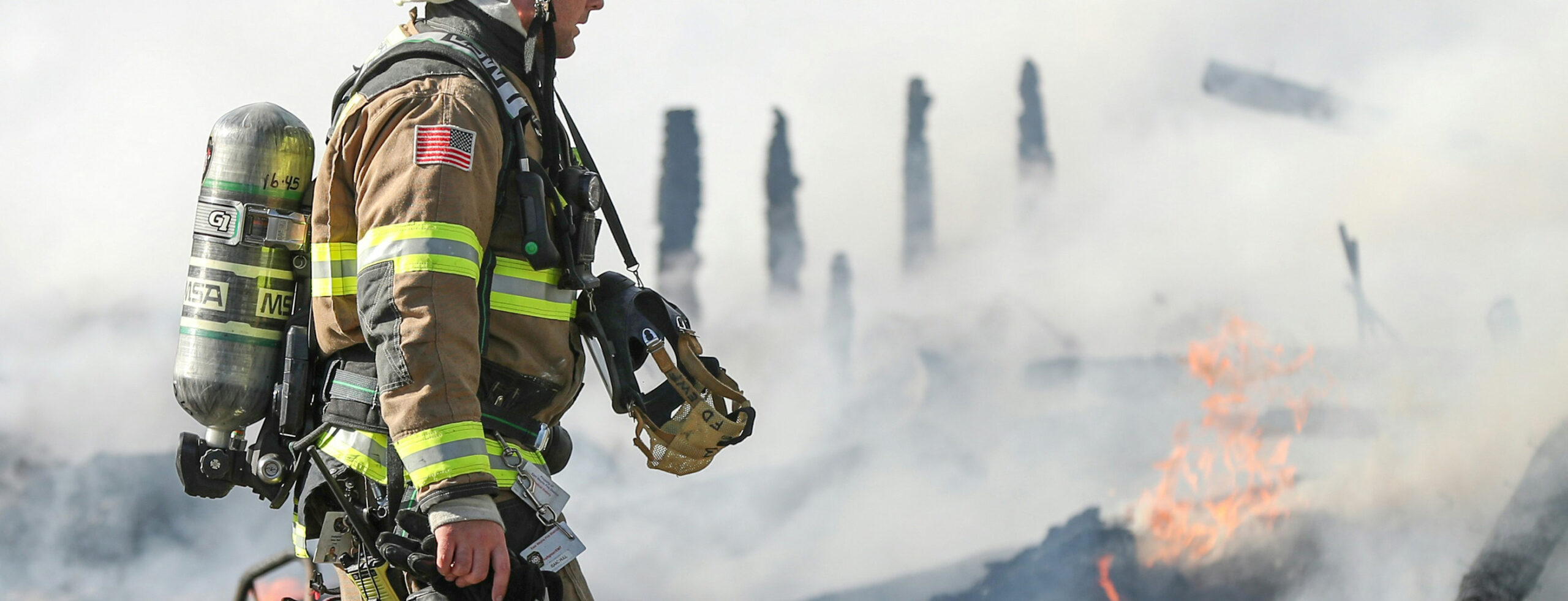
Why this matters for firefighter safety
SCBA readiness gaps have serious consequences.
Firefighter safety
Firefighters rely on SCBA in immediately dangerous environments. Any uncertainty around equipment condition puts lives at risk.
Compliance and accountability
Standards such as NFPA 1852 require clear documentation of inspections, testing, maintenance, and service history. Incomplete records weaken audit readiness.
Operational efficiency
Time spent searching for logs, confirming dates, or rechecking equipment is time taken away from training and readiness.
Equipment longevity
Without accurate lifecycle data, departments struggle to plan maintenance and replacement effectively.
Confidence across shifts
Crews need to trust that assigned SCBA equipment is safe and compliant. That trust depends on reliable documentation.
What a reliable SCBA management program requires
Managing SCBA effectively requires systems designed for life-safety oversight.
A strong program should:
Track every SCBA component
Packs, cylinders, masks, RIT packs, and cascades should all live in one system with clear assignments.
Automate inspection scheduling and alerts
Routine, post-incident, and special inspections should appear on schedule without relying on memory.
Capture fills, tests, and maintenance
Fills, flow tests, hydrostatic tests, repairs, and service events should be logged consistently and automatically.
Document exposure events
Exposure logging should trigger evaluation workflows and prevent compromised gear from returning to service.
Provide real-time visibility
Leadership should be able to see readiness and compliance status across all SCBA components instantly.
Support audit-ready reporting
Complete service histories should be accessible without reconstructing records from multiple sources.
Signs paper logs are undermining SCBA readiness
Many departments normalize small gaps until a problem surfaces.
Common warning signs include:
-
Uncertainty about inspection or test dates
-
Difficulty locating service records
-
Repeated rechecks across shifts
-
Missed or rushed documentation
-
Audit preparation requiring reconstruction
-
Limited visibility into SCBA status
These indicators suggest the system is no longer supporting safety.
What to look for in a better approach
When evaluating SCBA tracking solutions, departments should focus on reliability and accountability.
A strong solution should be:
-
Built specifically for SCBA lifecycles
-
Aligned with NFPA inspection standards
-
Automated to reduce missed steps
-
Centralized across stations and apparatus
-
Easy for crews to use consistently
-
Transparent for leadership oversight
Why agencies move to PSTrax
Agencies often adopt PSTrax when paper-based SCBA tracking creates unacceptable risk.
PSTrax helps agencies:
-
Track every SCBA component from acquisition to retirement
-
Automate inspections, alerts, and documentation
-
Log fills, tests, maintenance, and exposures
-
Maintain NFPA-aligned, audit-ready records
-
Provide real-time visibility into SCBA readiness
By replacing fragmented paper logs with a unified system, agencies protect firefighters and strengthen confidence in their most critical life-safety equipment.
Conclusion: SCBA readiness must be provable
SCBA readiness is not something departments can assume. It must be visible, verifiable, and documented with precision.
A modern SCBA management approach removes uncertainty and ensures that every pack, cylinder, and mask is ready when lives depend on it. Moving beyond paper logs is not just a process improvement. It is a safety imperative.
Request a Demo of PSTrax.
Complete the form below for a brief personalized demonstration of PSTrax and how we help public safety agencies successfully and move from pen and paper to a more reliable, efficient, and affordable solution.